Best Composite Toe Safety Shoes for Work
Choosing the right composite toe safety shoes can boost protection, comfort, and productivity on the job. This guide highlights top options with non-metallic toes, reliable slip resistance, and electrical hazard protection. Each pick combines everyday comfort with durable safety features to perform across construction, warehouse, and industrial environments. Below is a quick comparison table of the five featured shoes to help you decide at a glance.
| Product | Brand | Key Safety Feature | Notes |
|---|---|---|---|
| New Balance Fresh Foam Cremorne Composite Toe Safety Shoes (Men) | New Balance | Composite Toe, EH, Non-slip | Mid cut, athletic design |
| Hogent Steel Toe Shoes (Women & Men Wide) | Hogent | Steel Toe, Puncture-proof Kevlar Midsole | Lightweight, breathable mesh |
| Skechers Holdredge Ryker Slip-in | Skechers | Composite Toe, EH, Slip-resistant | Slip-in convenience |
| Timberland PRO Powertrain Sport Alloy Safety Toe | Timberland PRO | Alloy Safety Toe, EH | Arch support and energy return |
| Timberland PRO Drivetrain Mid Composite Toe | Timberland PRO | Composite Toe, Static Dissipative | Lightweight and protective |
New Balance Fresh Foam Cremorne Composite Toe (Men) Mid

New Balance Cremorne Men’s Mid Safety Shoes pair athletic styling with safety features to support active workdays. The composite toe offers toe protection without the weight of metal, while Toe Protect technology adds reinforcement around the forefoot. A slip-resistant rubber outsole with AT Tread enhances grip on varied surfaces, and electrical hazard resistance supports environments with live currents. The overall design emphasizes comfort, making these a strong option for workers seeking all-day wearability in demanding settings.
Key considerations:
– Composite toe provides protection without metal metal detectors or heat transfer concerns.
– EH rating helps in facilities with exposed electrical risks.
– Rubber outsole with AT Tread improves traction on slick surfaces.
– Mid-cut profile can offer ankle stability without sacrificing mobility.
Hogent Steel Toe Shoes (Women & Men Wide)

Hogent’s steel toe work sneakers emphasize safety with a puncture-proof Kevlar midsole and steel toe protection. Although described as steel toe, they are marketed toward both men and women with wide fits and a breathable knit upper. The combination aims to deliver secure protection with lightweight, fatigue-reducing comfort, particularly suitable for all-day use in construction, warehouse, and maintenance roles where nails, screws, or sharp objects pose hazards.
Key considerations:
– Steel toe and puncture-resistant midsole enhance protection against penetration and heavy impacts.
– Lightweight construction reduces fatigue compared with traditional steel-toe work boots.
– Breathable mesh promotes foot freshness, especially in hot environments.
– Wide sizing helps accommodate various foot widths for better fit and stability.
Skechers Holdredge Ryker Slip-in (Men)

Skechers Holdredge Ryker focuses on convenient slip-in design without compromising safety. The composite safety toe provides essential protection, while the outsole is engineered for superior slip resistance on wet, dry, oily, and greasy surfaces. Air-Cooled Memory Foam and Heel Pillow technology contribute to long-day comfort by offering cushioning and a secure fit. This model balances quick on/off capability with dependable safety features for repetitive tasks or fast-paced work environments.
Key considerations:
– Slip-in design reduces setup time during shift changes or breaks.
– Composite toe meets safety standards without metal, aiding ease at security checks.
– Memory foam insoles support comfort and reduce fatigue over extended wear.
– Traction-focused outsole helps maintain stability on diverse work surfaces.
Timberland PRO Powertrain Sport Alloy Safety Toe
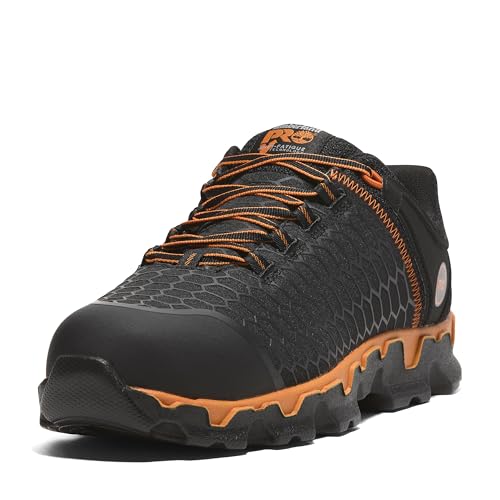
The Timberland PRO Powertrain Sport Alloy Safety Toe shoe combines an alloy toe with anti-fatigue technology to deliver energy return and comfort across long workdays. The alloy toe is lighter than traditional steel while maintaining impact resistance. Electrical hazard protection adds a protective layer against live circuits, and the design emphasizes durable construction with a focus on stability and extended wear. This model is well-suited for industrial environments where comfort and reliable toe protection are paramount.
Key considerations:
– Alloy toe reduces weight while maintaining safety standards.
– Anti-fatigue technology supports long shifts by improving energy return.
– Electrical hazard protection is important in facilities with live electrical components.
– Durable outsole and upper materials contribute to long-term wear resistance.
Timberland PRO Drivetrain Mid Composite Toe

Timberland PRO Drivetrain Mid pairs a lightweight composite toe with Advanced ShieldTechnology for protection and fit. The CarbonShield nanotechnology strengthens the toe area while reducing weight, which can enhance agility on the job. The model also includes SD35 static-dissipative properties that help reduce static buildup, making it suitable for electronic assembly lines or environments sensitive to static discharge, in addition to meeting standard safety certifications for impact and compression.
Key considerations:
– Composite toe reduces weight for improved comfort and mobility.
– CarbonShield enhances protection while maintaining a lighter profile.
– Static-dissipative features protect sensitive equipment and workers in electrostatic-prone areas.
– Modern, non-metallic design suits security checks and certain work sites better than metal-toe alternatives.
Buying Guide: Key Purchase Considerations For Composite Toe Shoes
When selecting composite toe safety shoes, several factors influence fit, protection, and performance. This guide outlines core considerations and how different features may suit varying work environments.
- Toe protection vs. weight: Composite toes are lighter than steel but still provide essential protection. Consider the trade-off if you work long shifts and prioritize lighter footwear for fatigue reduction.
- Electrical hazard protection: If your tasks involve near live electrical components, EH-rated footwear adds a layer of safety. Ensure the environment requires it before selecting.
- Slip resistance: Look for lug patterns and outsole materials designed for your typical surfaces (wet, oily, or dry). Wet environments benefit from deep treads and AT Tread or similar technologies.
- Breathability and comfort: Mesh uppers, cushioned insoles, and anti-fatigue tech can reduce fatigue on long days. Consider arch support, toe box width, and overall fit for your foot shape.
- Durability and material: Synthetic uppers balance weight and resilience. Kevlar or other puncture-resistant components in midsoles add protection in harsh environments.
- Fit and sizing: Some brands run true to size, while others vary. If possible, try on or check return policies when ordering online.
- Maintenance: Durable safety shoes benefit from routine cleaning and occasional tread checks. Keep laces and eyelets in good condition to maintain fit.
- Work environment alignment: For indoor settings, lighter and more flexible models may be preferred. For outdoor or rugged sites, emphasis on outsole grip and toe protection is key.
Leave a Reply